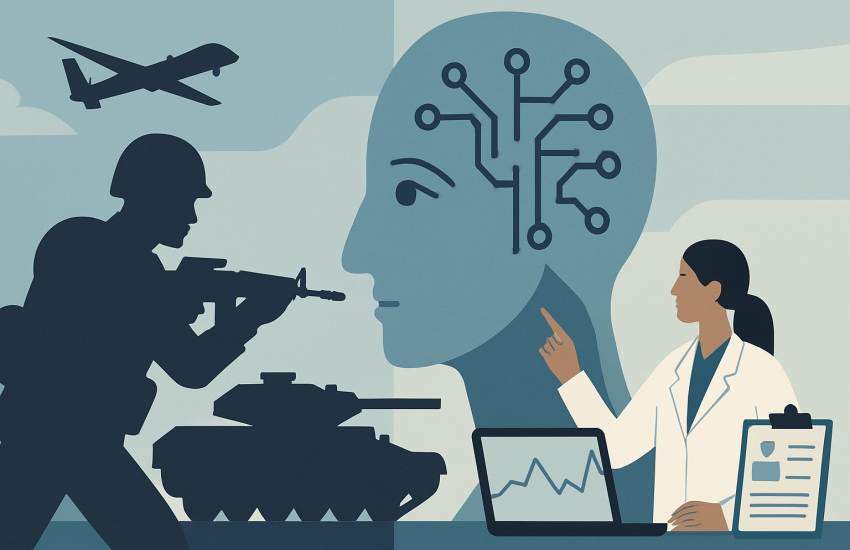
AI decision-support systems are often seen as just battlefield tools, but they are so much more

NATO bought an AI system to solve an information problem
NATO acquired its coalition AI decision-support system, NATO MAVEN, in March 2025 after a six-month process. The point was not simply to help commanders make battlefield decisions. The system was intended to bring together data from different countries, apply information-sharing rules, and create a shared view of military and civilian assets across a geographic area.
That distinction matters. The hard part of a large operation is often not a lack of data. It is getting the right data into the right hands under the right rules.
The useful idea is shared information, not military hardware
A Center for Security and Emerging Technology paper, Coalition Operations, the Untapped Role of AI in Military Decision-Making, describes AI decision-support systems as software that can ingest, analyze, display, and share data from many sources. The research examines common operating pictures, targeting decisions, information disclosure, and language differences.
In plain English, the system helps answer questions that sound familiar to any business owner. Which information is current? Which system is the source of truth? Who is allowed to see it? Can information from two different platforms be compared without someone exporting spreadsheets all afternoon?
NATO’s problem is much larger than anything a 30-person company will face. Coalition partners may use incompatible systems for ingesting, displaying, and manipulating operational data. They also operate under different national rules and restrictions. That makes the comparison useful, but only up to a point.
This is not a new commercial product announcement. No price, contract value, technical specification, or business availability was reported for NATO MAVEN.
Why this is relevant to a small business
Most small and mid-sized companies already have pieces of the same problem. Microsoft 365 contains identity and collaboration data. A firewall records network activity. Endpoint protection records device events. Backup software reports on recovery points. A line-of-business application holds the information employees actually need.
Those tools usually do not agree automatically. Worse, they may each use different permissions and different names for the same person or device. A security alert can sit in one console while the evidence needed to understand it sits somewhere else.
An AI system that correlates those signals could help an IT team see a fuller picture. It might connect an unusual login with a new device, a mailbox rule, and a suspicious file download. It could also apply access rules before showing sensitive information to a manager or technician.
That is the practical lesson. Not “buy military AI.” Build systems that can share useful information without ignoring permission boundaries.
Infrastructure and policy come before AI
Sophie Mayo, one of the paper’s authors, said NATO’s adoption depended on existing infrastructure, policy frameworks, and political support. The research also identifies political and bureaucratic obstacles as major barriers to adoption.
Businesses have their own version of this problem. If employee accounts are inconsistent, devices are unmanaged, logs are missing, and nobody has agreed on who may access customer records, adding an AI layer will not fix the mess.
It may make the mess harder to see.
Before considering AI-driven decision support, we would first standardize identity management, require multi-factor authentication, bring company devices under management, and confirm that critical systems produce usable logs. We would document who can access financial records, customer information, and administrative tools. Then we would decide which alerts deserve automatic correlation.
That work is less exciting than a military AI announcement. It is also more likely to reduce risk this quarter.
What we would do with the IT budget
For most local businesses, NATO MAVEN changes nothing about the next technology purchase. We would not spend money chasing a defense platform, and we would be skeptical of any vendor claiming that an expensive AI product is necessary because NATO uses one.
We would spend the budget on connected basics first. That means reliable backups with tested restores, endpoint detection, strong identity controls, centralized logging, and a written response plan. Once those pieces are working, we would evaluate whether existing Microsoft, security, or business applications can correlate events without sending sensitive company data into an unapproved service.
We would also keep a person in the approval loop. AI can identify a pattern. It should not decide on its own to disable a key employee, delete records, or disclose confidential information.
Ask your IT provider to map where security and business data lives, who can access it, and which systems can exchange it safely. IT911Now can help with that review, and the first goal should be a clear data and access map, not an AI purchase.