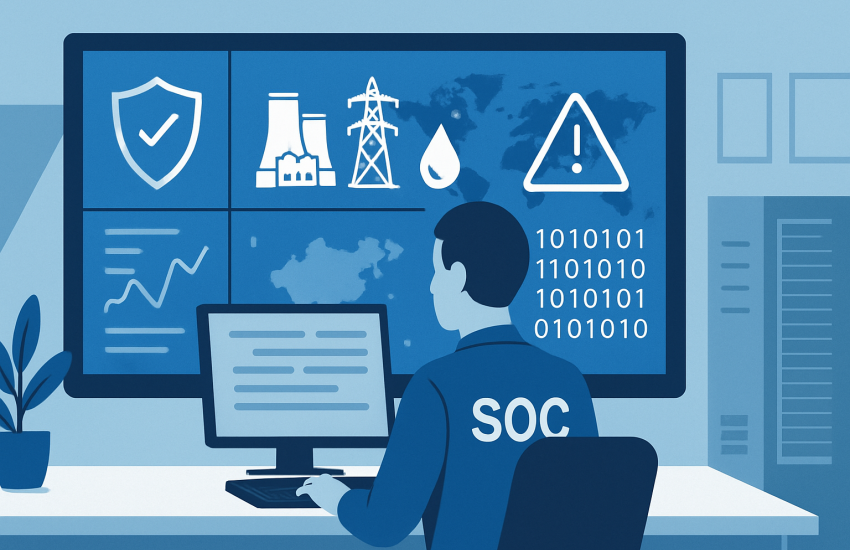
LevelBlue Sydney SOC Targets Critical Infrastructure Risks

LevelBlue put a Sydney SOC live on August 25, 2026
LevelBlue opened a new Security Operations Center in Sydney, and it went live on August 25, 2026. The company announced it publicly on August 27, 2026, and said the buildout was a multi-million-dollar investment aimed squarely at Australian critical infrastructure owners and operators.
That matters for businesses that rely on outside security help, especially the ones that cannot justify building a full-time SOC of their own. We are not talking about a flashy product launch here. We are talking about a provider putting analysts closer to the customer and closer to the local rules.
What the Sydney SOC actually gives you
LevelBlue says the Sydney team provides 12 hours of Australia-based coverage every day, plus 24/7 monitoring and response through its global SOC network. It also says customers get local escalation paths, local analysts, and threat intelligence applied by both local and global teams.
That is the useful part. If an alert hits at 8:15 a.m. Sydney time, you are not waiting for someone on the other side of the world to wake up and read the ticket. For a smaller company, that can shorten the ugly gap between detection and action.
This is especially aimed at critical infrastructure owners and operators, and LevelBlue says the service supports SOCI Act obligations. That is a specific pitch for a specific market. If you are a 30-person company running office networks, endpoints, and cloud apps, the SOCI angle probably does not change much for you.
What this means for a small business with a tight IT budget
The real story is not “Australia got another SOC.” The real story is that managed security keeps moving toward local coverage backed by global operations. That is a practical model, and it is one we like better than pretending a small internal team can watch everything, every hour, every day.
Still, this does not magically solve security. A local SOC does not fix weak passwords, unmanaged laptops, bad backups, or a company that still shares admin accounts. If the basics are broken, a better monitoring center just lets you see the failure faster.
It also does not mean you should rush to buy anything. Pricing was not disclosed, staffing details were not confirmed, and it is not clear whether LevelBlue offers any data residency guarantees. Those are not small questions. They matter a lot if your contracts, regulators, or clients care where logs and incident data live.
What we would do before spending a dollar
If we were running IT for a small or mid-sized business, we would look at this kind of announcement as a signal, not a buying trigger. It tells us the market still values local response with global backup. Fine. That is useful.
Before signing anything, we would ask a provider these questions:
- Where are the analysts located during business hours and after hours?
- What is the actual response time for a critical alert?
- What data is stored in Australia, and what is not?
- How are escalation calls handled after a real incident starts?
- What does the monthly cost cover, and what gets billed separately?
Those answers tell us more than the marketing language does. We also want to know whether the service can handle our endpoints, cloud email, Microsoft 365, and firewall alerts without forcing us into a bunch of extra tools we do not need.
The plain read for San Diego businesses
For a San Diego company, the geographic detail is not the point. The point is the operating model. Local-ish human response, backed by a bigger security team, is usually a better fit for a budget-conscious business than trying to build a 24/7 internal SOC from scratch.
If you run a small or mid-sized company, do not get distracted by the headline. Ask whether your current provider can actually find, triage, and respond to a real incident fast enough to matter. If not, that is where the money should go next, and IT911Now can help you sort that out before you buy the wrong security service.