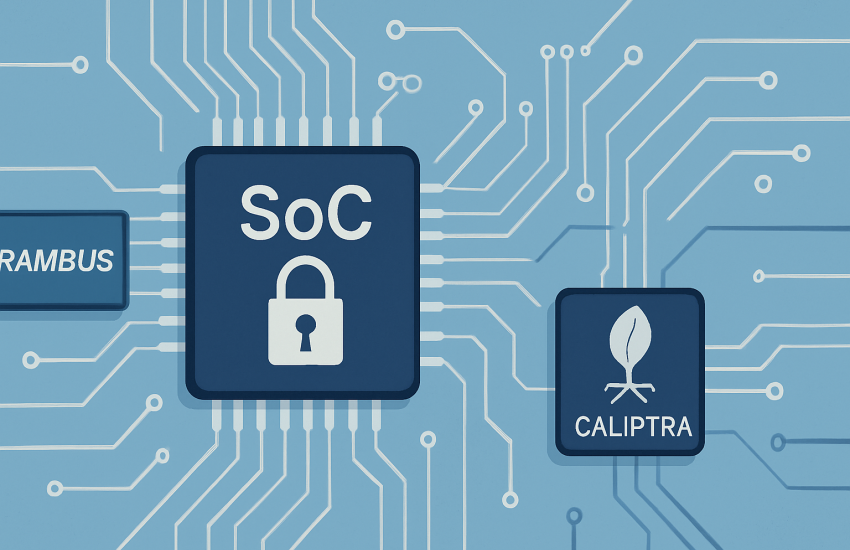
Rambus Gets to the Root of SoC Security With Caliptra Support

Rambus Puts a Security Layer Beside Caliptra
Rambus announced its CryptoManager Root of Trust for the Caliptra specification on September 14, 2026. The product is designed for the companies that build data-center and artificial intelligence chips, not for the typical 30-person business buying laptops and Microsoft 365.
That distinction matters. The announcement is about silicon inside future servers and AI systems. It is not a new firewall, endpoint agent, or cloud service that we would install at a San Diego office next week.
What Rambus is actually adding
Caliptra is an open-source silicon root of trust. In plain language, it gives a system-on-chip, or SoC, a hardware-based place to establish identity, verify measurements, and support attestation. Those functions help a server prove that it started with approved firmware and that key security components have not been altered.
Rambus says its CryptoManager solution works alongside an unmodified Caliptra core. That is a practical detail. Chip designers can keep the open Caliptra foundation while adding Rambus security functions around it, instead of replacing the core and starting over.
The added subsystem includes a secure RISC-V processor, protected memory, secure storage for keys and data, cryptographic accelerators, and protected interfaces. It also handles security tasks such as secure boot, firmware authentication, updates, device identity, attestation, key provisioning, and secure communications.
That is a lot of machinery. Most business owners will never see it directly.
Why this could affect smaller companies later
The useful idea here is hardware-backed trust. Today, much of a company’s security depends on software deciding whether a device, workload, firmware image, or remote system is trustworthy. Hardware roots of trust give that software a more difficult foundation to fake or tamper with.
Future servers using Caliptra-based chips could offer stronger device identity and attestation. They may protect encryption keys more effectively and make it easier for cloud providers, hosting companies, and infrastructure vendors to verify the condition of a machine before allowing sensitive workloads to run.
That could matter to a small medical practice, law firm, manufacturer, or professional services company using hosted applications. The benefit would arrive through the infrastructure provider. We would not need to configure Rambus CryptoManager ourselves.
But this is a future infrastructure story, not an immediate purchasing signal. Rambus has not confirmed pricing, customer deployments, or broad availability. There is also a date mismatch in the public coverage, with the announcement dated September 14, 2026 and one article dated October 6, 2026. The announcement date is the useful one.
Post-quantum support sounds bigger than it is today
Rambus says the architecture supports classical, post-quantum, and regional cryptographic algorithms. It also includes protections against side-channel and fault-injection attacks, along with certification readiness for FIPS 140-3, PSA, and SESIP.
Those capabilities matter to chip manufacturers and infrastructure operators with serious compliance requirements. They do not mean a small business suddenly has post-quantum protection across its entire network.
We would not recommend delaying a laptop refresh or buying a new security platform because a future server may support these algorithms. A company still gets more value today from properly managed identity, prompt patching, tested backups, phishing-resistant sign-in, and monitoring that someone actually reviews.
What we would do with a limited IT budget
We would file this under infrastructure to watch, not infrastructure to buy. If a company is choosing a new cloud provider or hosted application platform, we would ask how that provider handles hardware-backed identity, workload attestation, encryption keys, and server lifecycle security. Those questions are more useful than asking whether the provider uses a specific silicon brand.
We would also review contracts and security documentation before accepting broad claims about AI security. “Hardware root of trust” is valuable, but it does not repair a weak administrator account, an exposed remote desktop service, or an untested backup.
For most small and mid-sized businesses, Rambus’s Caliptra support changes nothing this month. It may improve the servers they depend on over the next few hardware cycles. Spend today’s budget on the controls protecting your actual users and data, then ask your infrastructure providers how they plan to use hardware-backed security. IT911Now can help you make that review practical.