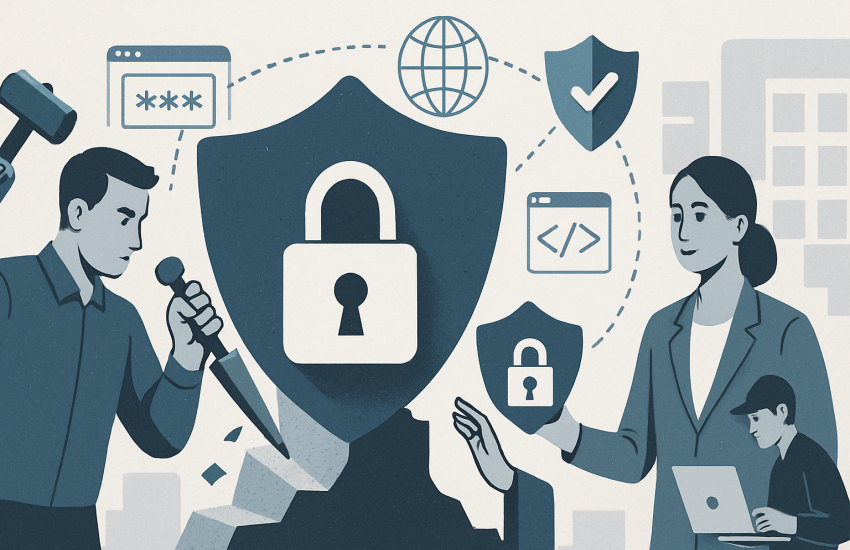
Specialist security providers carve out cyber security niches

Cybersecurity is becoming a business responsibility, not just an IT task
Specialist cybersecurity providers are building focused services for organisations that need security monitoring, compliance support, or expertise their own IT teams do not have. That was the message from an Australian security industry report published on 9 October 2026.
The shift matters because cybersecurity now reaches the owner, the board, the insurer, and the company’s customers. IT still operates the systems. Business leaders are increasingly responsible for showing that those systems are being protected.
That does not mean every 30-person company needs a security department. It does mean that “we have antivirus” is no longer a complete answer.
Why specialist providers are finding room to grow
Many managed service providers can handle Microsoft 365, laptops, servers, backups, and user support. Cybersecurity demands a different depth of work. Someone has to review alerts, investigate suspicious activity, maintain policies, prepare evidence for audits, and understand what an insurer or regulator may ask to see.
That is difficult to provide with a small internal team. It is also difficult for an MSP that has strong general IT skills but lacks dedicated security staff.
The Australian providers described in the report are targeting that gap. They offer focused services to MSPs and organisations that need specialist capability without hiring a full security team. The article does not identify provider names, customer organisations, contract values, or specific products, so there is no reason to pretend this is a list of ready-made solutions for San Diego businesses.
The direction, however, is clear. More companies are buying specific security outcomes instead of expecting one general IT provider to do everything.
What this means for a small business in San Diego County
For most small and mid-sized businesses, the practical question is not whether to copy an Australian security model. The question is where expert help would remove the most risk from the budget already available.
That may be continuous alert monitoring. It may be help preparing for a cyber-insurance renewal. It may be a review of Microsoft 365 settings, administrator accounts, backup recovery, or employee access after someone leaves the company.
Compliance support can also be useful even when a business is not directly regulated. A customer may require a security questionnaire. A larger partner may ask for documented controls. An insurer may request proof that multifactor authentication and backups are in place. Those requests turn security work into business paperwork, not just technical maintenance.
We would not start by buying a large security platform. We would start by identifying who is watching alerts, who responds after hours, and who can produce evidence when a customer or insurer asks for it.
Do not confuse a security add-on with security coverage
Specialist services can fill a real gap, but the label alone does not protect a company. A monitoring service that sends alerts without investigating them is not a response plan. A compliance package that creates policies nobody follows is paperwork. A vulnerability report that never becomes a repair ticket is just a document.
Ask what happens after a high-risk alert appears. Ask whether someone contacts your team, what response times apply, and how incidents are documented. Ask how often reports are reviewed with the business owner, not only with the technician.
Also ask where responsibility stops. If a specialist provider monitors the network but your IT provider manages Microsoft 365, someone must own the handoff. Confusion during an incident costs more than the monthly fee ever saved.
What we would do with a limited IT budget
We would put the basics in order before adding another dashboard. Every administrator account would use multifactor authentication. Former employees would lose access promptly. Backups would be tested, not merely reported as successful. Critical systems would have clear owners. Staff would know where to report a suspicious message.
Then we would spend on the gap the business cannot cover internally. For one company, that could be managed detection and response. For another, it could be a quarterly security review and help with customer compliance requests. A business with no documented incident process may get more value from building that process than from purchasing another tool.
The report’s central point is useful, but the headline should not cause panic. Specialist cybersecurity services are expanding because many companies need focused help. That does not mean a small business needs every available service.
Write down the security tasks nobody clearly owns, then ask IT911Now to review those gaps and recommend the smallest practical next step.